Sani Pass to Lesotho
We scheduled two days of tours with Dr. Aldo Berruti, an ornithologist who not only leads tours for bird-watchers, but also for people like us who are interested in everything - the wildlife, botany, history, cultures, and politics of the region. His wife, Sharon, is a botanist who had planned to join us, but unfortunately she had a last-minute conflict.


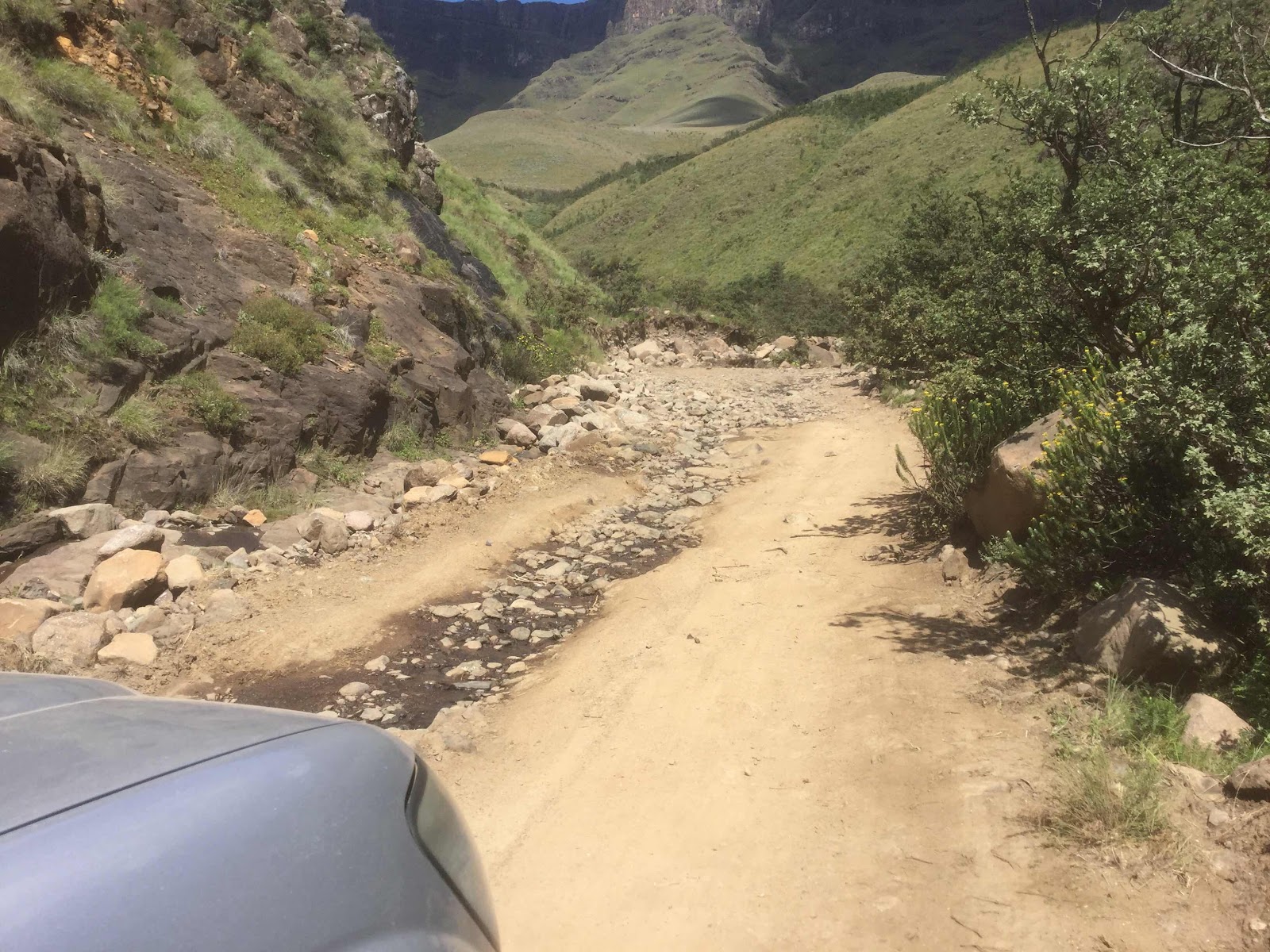
After that stretch, the road was as we remembered it, but even rougher.



Shepherds are young boys (as young as 10) who are either sons of families who own sheep or AIDS orphans (Lesotho has among the highest rates of AIDS in the world, and very little in the way of social services). They live on their own in tiny huts with their flocks. We saw many walking up on the hillsides, wearing their customary white gum boots and blankets.
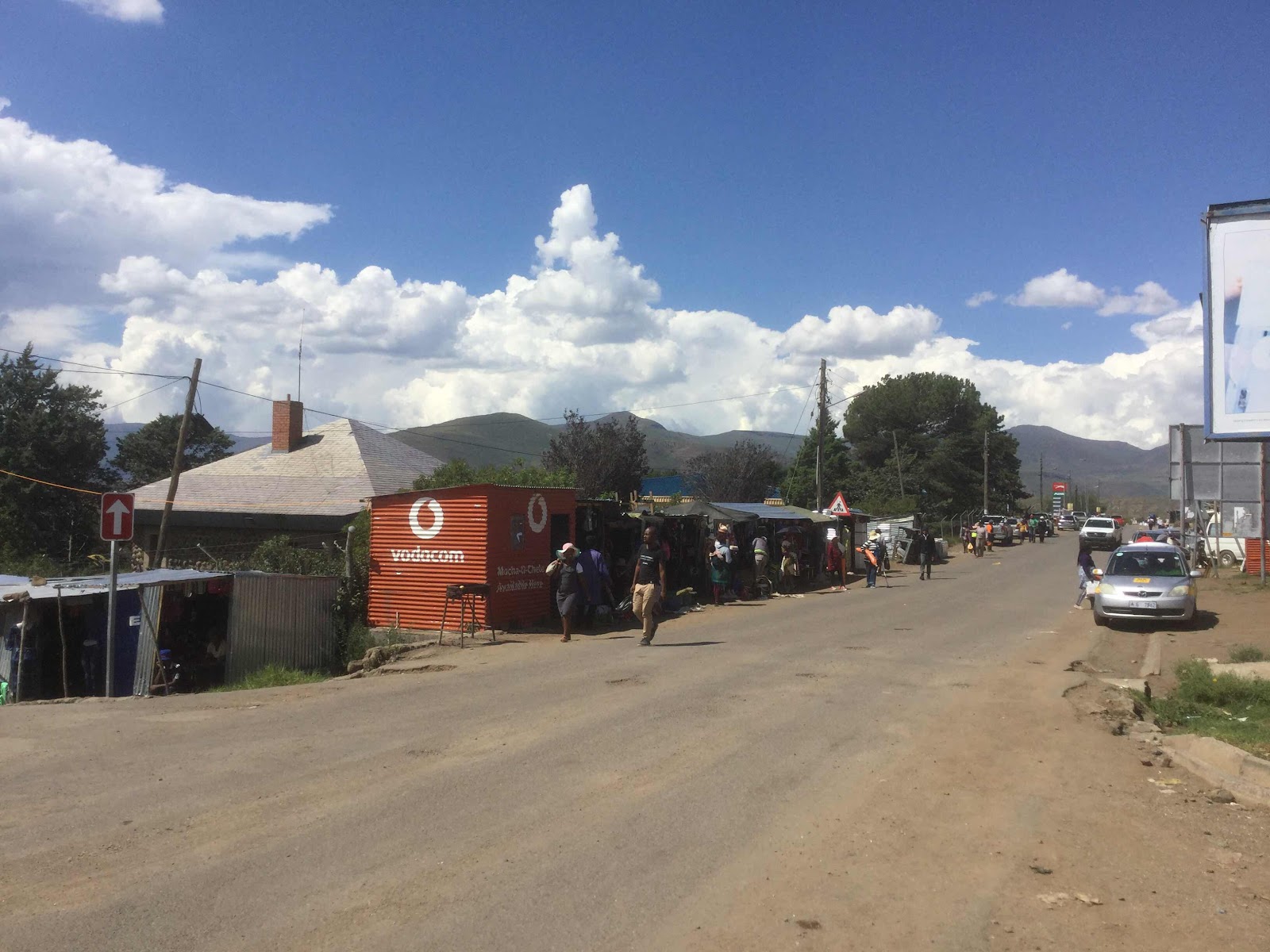
The “Vodafone” building was typical of the tiny shops that lined the main street - Aldo explained that the shop didn’t sell phones - the company painted the buildings as advertising. The buildings look like they were made out of old shipping containers. Nearly all the cars in town were taxis, and most people walked.

After we crossed the border from Lesotho back into South Africa, we stopped at the “Highest Pub in Africa” to take a couple of pictures.


On Monday we took our first tour, up the Sani Pass into Lesotho. One of our first questions for Aldo was where the name “Sani Pass” had come from. He said that the source was uncertain - some said that it derived from the term for the original inhabitants of South Africa, the San, but more likely it was a shortened version of the name the Besotho chief who ruled the area at the top of the pass.
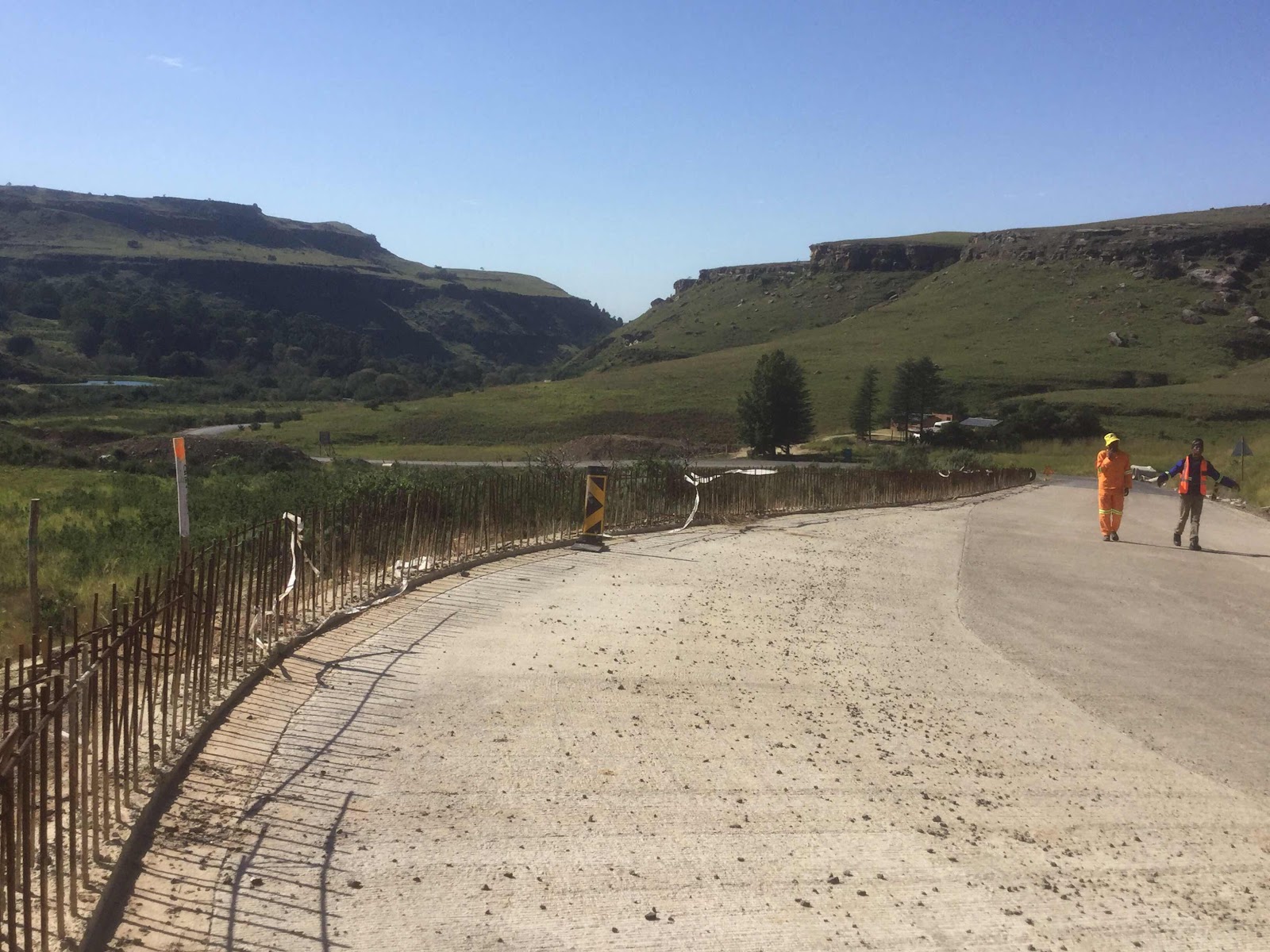
Much has changed since we were here two years ago - the questionable plan to pave this incredibly rough, steep track (image the worst rutted, washed out driveway you’ve ever tried to navigate, and multiply it by a factor of ten) is now underway. Thus, the first third of the route was construction.
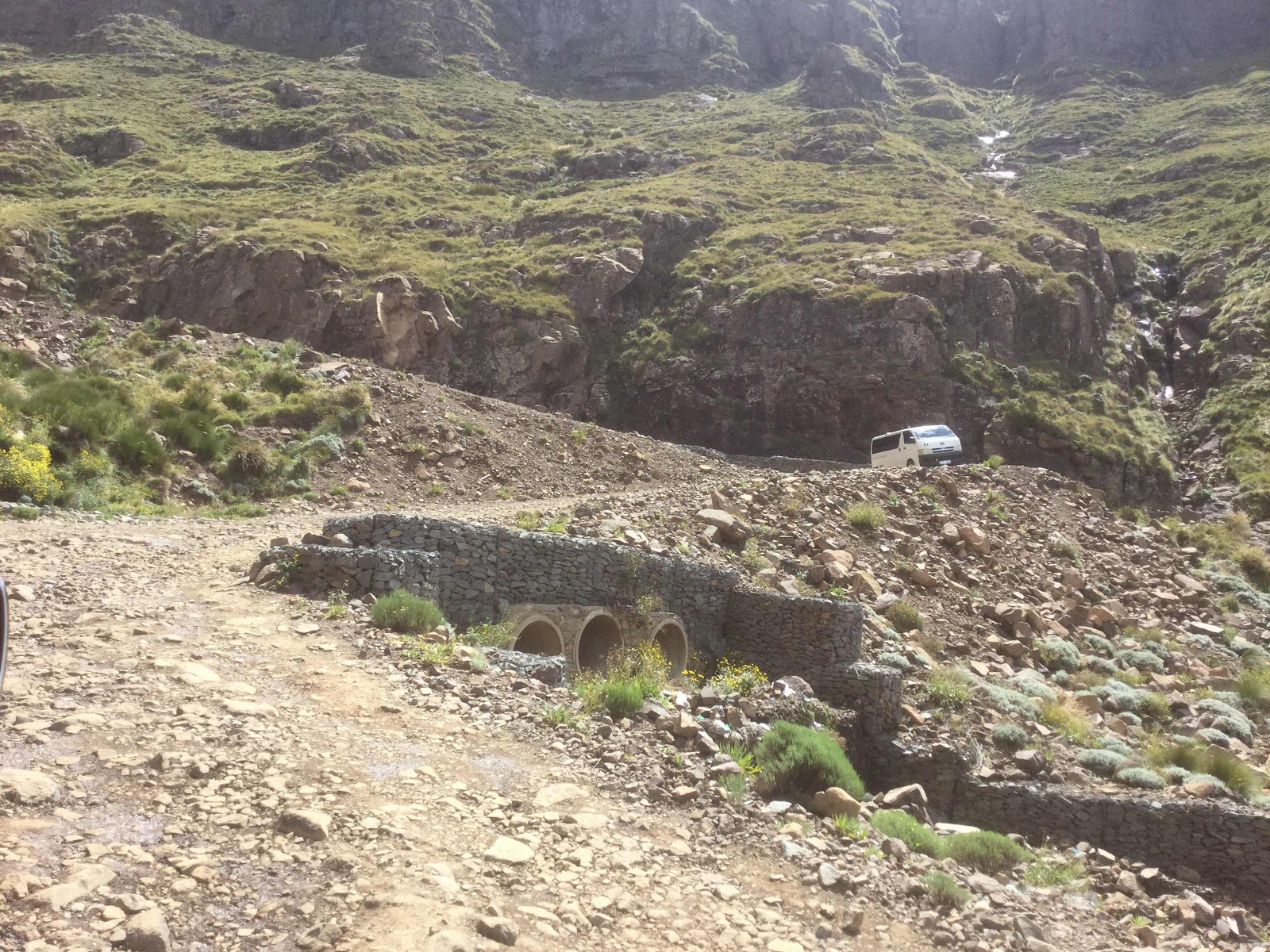
After that stretch, the road was as we remembered it, but even rougher.
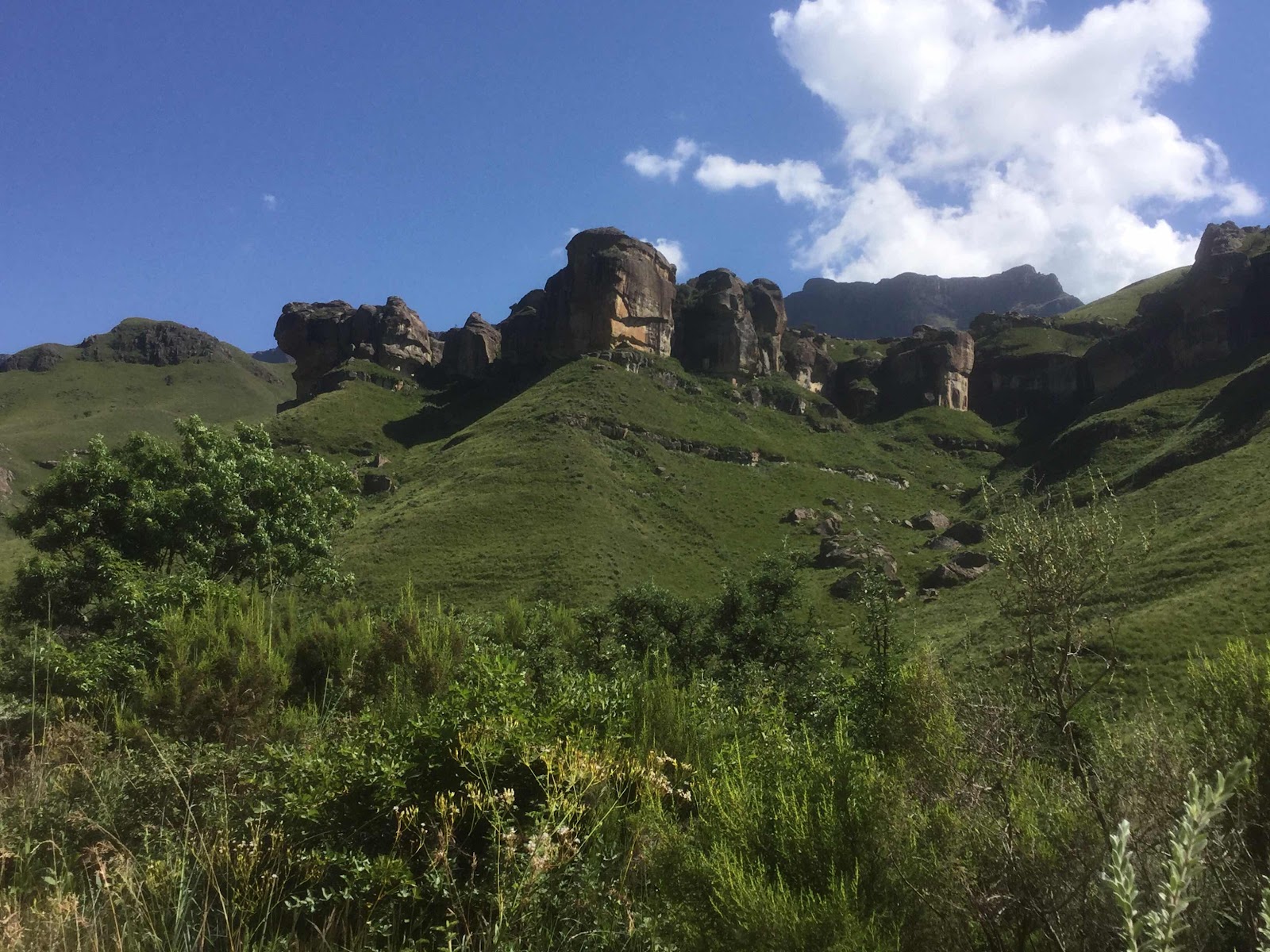
But the scenery is spectacular.
It was an absolutely gorgeous day.
We saw - and heard - a lot of birds, some of which are found only in the Drakensburgs, like the Drakensburg Rock Jumpers.
We saw - and heard - a lot of birds, some of which are found only in the Drakensburgs, like the Drakensburg Rock Jumpers.
The alpine wildflowers were gorgeous.
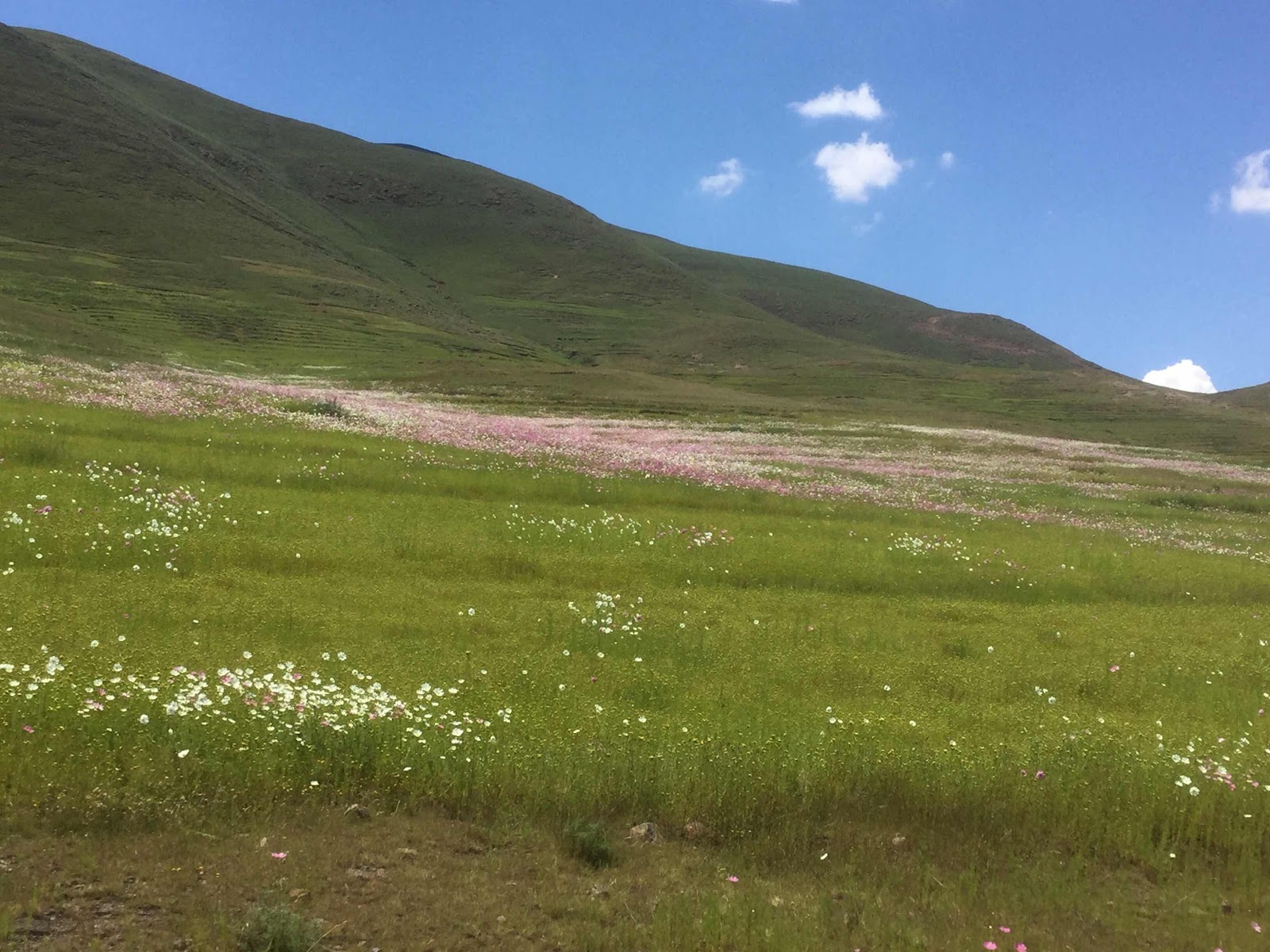
We also saw fields of pink and white cosmos - they aren’t native, but were introduced with loads of grain imported from South America.
When we got to the border crossing into Lesotho, we got out to stretch our legs as Aldo took our passports to get stamped (it’s the most laid-back border crossing I’ve ever experienced!). John saw two motorcyclists who’d just made it up the pass, and he walked over to talk to them - turns out, he knew one of them!
As we continued into the country of Lesotho, we came across a couple of sheep herders moving their flock across the road.
Shepherds are young boys (as young as 10) who are either sons of families who own sheep or AIDS orphans (Lesotho has among the highest rates of AIDS in the world, and very little in the way of social services). They live on their own in tiny huts with their flocks. We saw many walking up on the hillsides, wearing their customary white gum boots and blankets.
Aldo took us much farther into the country of Lesotho than we had gone two years ago, past the sparsely populated eastern edge to a town.
The “Vodafone” building was typical of the tiny shops that lined the main street - Aldo explained that the shop didn’t sell phones - the company painted the buildings as advertising. The buildings look like they were made out of old shipping containers. Nearly all the cars in town were taxis, and most people walked.
Lesotho is one of the poorest countries in the world. Aldo explained that the overall crime rate is very low - likely the result of small town living where everyone knows everyone else’s business - but the murder rate is high. Towns are ruled by heredity chiefs, and the country is ruled by a monarchy.
Despite all its dire problems and subsistence lifestyle, the people are remarkably content.
After we crossed the border from Lesotho back into South Africa, we stopped at the “Highest Pub in Africa” to take a couple of pictures.
Notice the change in weather - those clouds in the background are going to turn into a rip-roaring storm, complete with lightning, hail, and torrential rains. Thankfully we made it down the steepest part of the pass before the rain started and were off the pass entirely before things got really wild. However, at one point (after we were back down to the main road) we had to pull over and wait for the hail to subside before we could safely continue.


Comments
Post a Comment